2026-02-18 · Technical Article
How to Fix Uneven Masterbatch Dispersion?
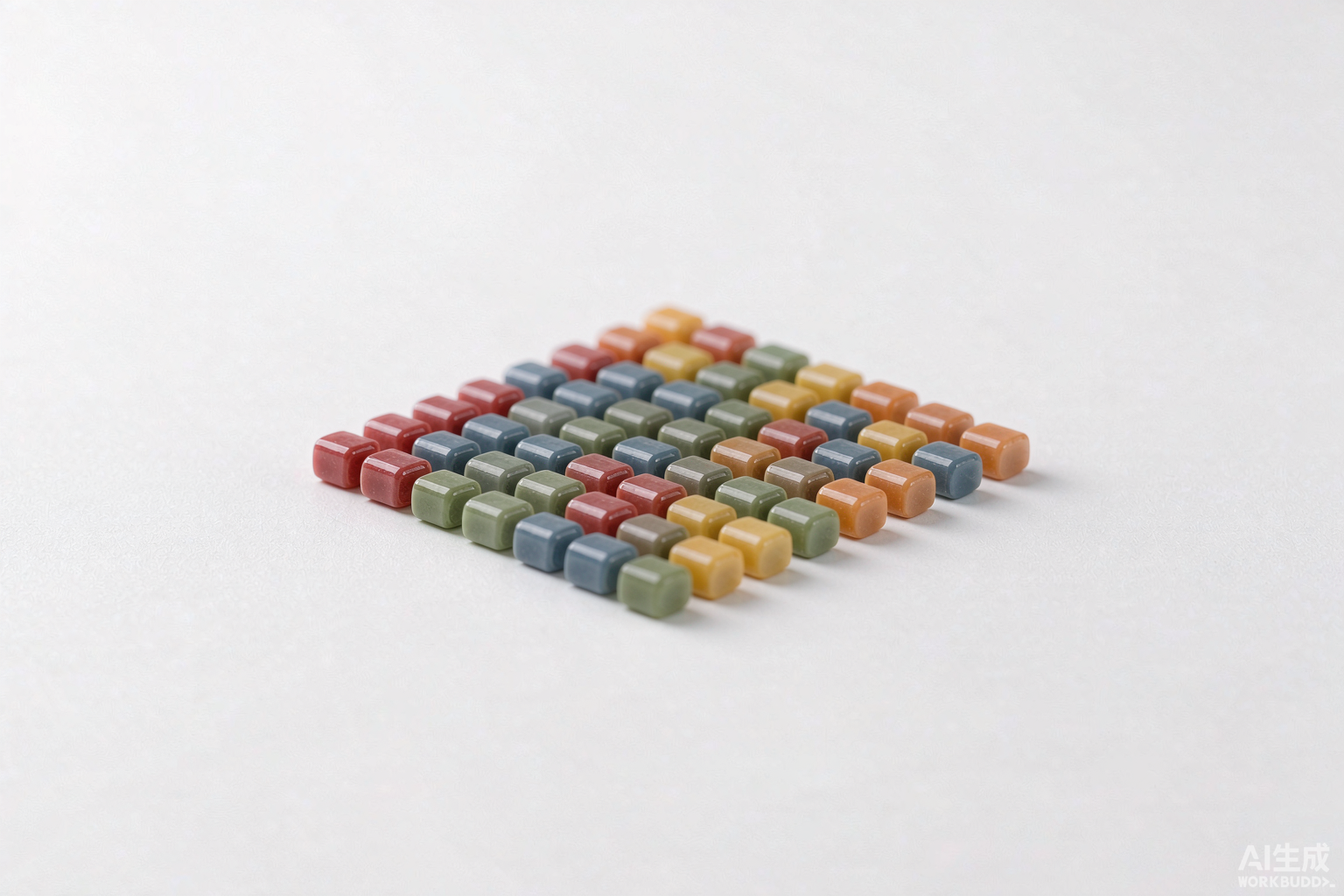
Uneven dispersion shows up as gels, color specks or streaks on the part surface, pushing batch color deviation out of spec. Work through these four checkpoints in order.
1. Carrier Compatibility
The masterbatch carrier must be compatible with the base resin: PE carriers for PE parts, PP carriers preferred for PP parts — this greatly reduces phase separation. For ABS, PS or PET, match the dedicated carrier grades (e.g. PET-specific color masterbatch, PS-carrier white 1114B).
2. Addition Rate
Most masterbatch works best at 2–4%. Over-dosing doesn't deepen color — it causes local oversaturation and specks — while under-dosing hurts opacity. Determine the optimum empirically from MFI and wall thickness.
3. Screw Configuration & Shear
- Shorten the compression section to avoid over-shearing the pigment into agglomerates
- Add mixing elements (e.g. kneading blocks) to improve radial mixing
- Keep the feed throat free-flowing to prevent masterbatch "bridging" and intermittent starvation
4. Melt Temperature
Too cold: high melt viscosity, poor pigment wetting. Too hot: organic pigments may decompose and shift shade. For PE/PP, stay within 160–230 °C and fine-tune per machine.
If dispersion issues persist after all four checks, send us your resin, color code and process parameters — our R&D team will adjust the dispersant system and carrier formulation for you.Submit Requirements →
2026-03-05 · Technical Article
Guide to Masterbatch Addition Rates in Injection Molding
Addition rate directly determines color effect and cost. The ranges below are recommended starting points for common cases.
| Masterbatch type | Recommended addition rate | Note |
|---|
| White masterbatch (TiO₂ 50–70%) | 2%–5% | Use the upper limit for thin walls, lower for thick sections |
| Black masterbatch (CB 30–50%) | 1%–4% | High-jetness grades as low as 1% |
| Color masterbatch (20–40% pigment) | 2%–4% | Lower dosage for dark shades, higher for light shades |
| Pearlescent / metallic effect masterbatch | 3%–6% | Control screw shear to preserve the pearlescent effect |
| Functional masterbatch (anti-static, anti-UV, etc.) | 0.5%–5% | Determined by function type and active content |
Three Common Mistakes
- "The more, the better": Over-dosing raises cost and may degrade mechanical properties
- "Longer mixing is always better": Over-mixing separates pigment from pellets — keep it to 3–5 minutes
- A dosage that works for one shade may not for another: Tinting strength varies several-fold between pigments — each needs its own color trial
2026-03-22 · Industry Update
How filler masterbatch cuts processors' costs by 20–60%
Compounding CaCO₃ with the resin carrier, filler masterbatch substitutes part of the resin while preserving product performance — one of the most direct cost-cutting tools in plastics processing.
How It Saves Costs
Filler masterbatch typically carries 70–86% CaCO₃ and can replace 20–60% of resin in the formulation depending on the process, while also improving whiteness, hardness, stiffness and printability.
Dosage limits
- Tape yarn: MC-R14 (84%) suits mid-to-high denier tape yarn; recommended with high-speed extruders
- Nonwoven: NW05 (75%): dosage ≤62%; choose NW00 for low-GSM applications
- Blown film: MC-F16 (86%): dosage ≤40%; for thin products switch to the ≤52% grade
- Tarpaulin: MC-HD08/HD10 (78%/80%): dosage ≤58%
Quality Control Essentials
Uniform particle size and gel-free quality are the key indicators of filler masterbatch. LEDAO controls particle size at 3 μm, moisture ≤0.06%, processing window 140–280 °C — fully compatible with standard resin processing.
To calculate the savings for your current formulation, Submit process parameters — we will provide a usage and cost comparison proposal.